Views: 0 Author: Site Editor Publish Time: 2026-09-08 Origin: Site
The adult personal care market is experiencing a sustained shift from dry tissue to moist alternatives, driving significant demand for flushable Toilet Wet Wipes. Brands and distributors face a highly fragmented manufacturing landscape where the term "flushable" is often misused. This misrepresentation leads to potential regulatory fines, municipal plumbing infrastructure damage, and severe brand reputation risks. Successfully launching a private label line requires partnering with a manufacturer capable of balancing material dispersibility, tear resistance, and skin-safe formulations. You need a supplier who understands the exact mechanical bonding required to keep a sheet intact during use while ensuring it breaks apart instantly in a sewer system.
This guide provides a technical evaluation framework for selecting the right manufacturing partner for your product line. We will cover substrate selection, liquid dosing accuracy, and packaging integrity to ensure your launch meets strict industry standards.
Compliance is Non-Negotiable: True flushability requires adherence to strict industry standards (e.g., INDA/EDANA GD4 guidelines) utilizing 100% plant-based, cellulosic fibers.
Material Trade-Offs: Brands must balance low grammage (GSM) for rapid dispersibility with high absorbency and sufficient wet-strength to withstand repeated wiping.
Formulation Matters: Because these products are used on sensitive skin, hypoallergenic, pH-balanced, and dermatologically tested formulations tailored to specific target audiences are critical baseline requirements.
Scalability & Packaging: Evaluating a manufacturer goes beyond the wipe itself; bespoke packaging that guarantees moisture retention, optimized production processes, and scalable Minimum Order Quantities (MOQs) dictate long-term unit economics.
Table of Contents
Consumers want a thick, durable sheet that feels substantial in hand. They expect it to hold up under pressure without tearing or pilling. However, wastewater systems demand the exact opposite. Municipal plumbing requires rapid breakdown of any introduced material to prevent lift station clogs and pipe blockages. You have to bridge this gap between user experience and municipal plumbing realities. If a sheet is too strong, it clogs pipes. If it is too weak, it fails during application.
Baseline product requirements include softness, dispensing ease, moisture consistency, and high absorbency. Softness prevents skin irritation during daily use. Dispensing ease ensures users only pull one sheet at a time from the package. Moisture consistency keeps the top sheet as damp as the bottom sheet. High absorbency ensures the liquid formulation remains locked within the substrate until applied to the skin. Manufacturing lines must utilize precision cross-lappers and carding machines to align the fibers correctly to achieve this balance.
Structural integrity is paramount. The substrate must withstand repeated wiping without pilling. It cannot tear prematurely during use. Achieving this requires precise fiber entanglement during manufacturing. Engineers calibrate the water pressure during the hydroentanglement process. They lock fibers together just enough to survive use, but loosely enough to separate upon flushing. We see many brands fail here because they push for higher wet strength without testing the corresponding drop in dispersibility.
Claiming a product is flushable requires rigorous scientific substantiation. You cannot simply label standard Wet Wipes as flushable. Standard versions contain plastic polymers like polyester that never degrade in water. Doing so invites severe legal risks, class-action lawsuits, and immediate consumer backlash. Regulatory bodies actively penalize misleading environmental claims, and municipal water authorities frequently test retail products to identify the source of sewer blockages.
Specific testing frameworks validate these claims. Slosh box testing measures how quickly a sheet disintegrates in agitated water. Technicians place the sample in an oscillating box filled with wastewater and time the degradation process. Municipal pump testing ensures the material passes through sewer infrastructure without clogging impellers or snagging on lift stations. Passing these stringent tests guarantees environmental compliance. It protects your brand equity in a highly scrutinized market. You must demand these test results from your manufacturing partner before signing any supply agreement.
The foundation of any flushable product is the nonwoven substrate. Manufacturers typically use specialized hydroentangled cellulosic fibers. These fibers bind together without synthetic resins or chemical adhesives. High-pressure water jets weave short-fiber wood pulp and viscose together on the production line. This creates a mechanical bond that holds strong in the package but releases when submerged in a toilet bowl. The specific ratio of wood pulp to viscose dictates both the cost and the softness of the final product.
There is an inverse relationship between wet strength during use and tear resistance during disposal. The material must hold together under physical pressure. Once submerged in a toilet, it must lose tensile strength rapidly. Evaluating a manufacturer requires reviewing their substrate data sheets. You need to confirm this delicate balance is achieved consistently across production batches. Look closely at the cross-direction (CD) and machine-direction (MD) tensile strength metrics provided by the factory.
Customizable sizes and material blends are essential for market penetration. Different demographics require different specifications. Adult incontinence products demand larger, thicker sheets for effective cleaning. Toddler training products require smaller, softer profiles designed for sensitive skin. Selecting the right blend ensures the product resonates with specific target audiences.
Request detailed fiber composition breakdowns from potential manufacturing partners.
Verify the complete absence of polyester, polypropylene, or other synthetic binders.
Test substrate samples for tensile strength in both machine direction (MD) and cross direction (CD).
Evaluate the tactile softness of the material against competing retail brands.
Confirm the manufacturer can adjust sheet dimensions without requiring entirely new tooling.
Liquid formulations dictate safety, efficacy, and shelf life. The process starts with rigorous water purification. Manufacturers must use EDI (Electrodeionization) or RO (Reverse Osmosis) water. This multi-stage filtration removes heavy metals, minerals, and potential biological contaminants. Using ultra-pure water prevents microbial growth inside the sealed package over time. The water purification system should be a closed-loop design to prevent environmental contamination on the factory floor.
Formulations require careful selection of preservatives and soothing agents. Ingredients like aloe vera, chamomile extract, and vitamin E provide tangible consumer benefits. You must strictly avoid harsh surfactants, parabens, and alcohol. These chemicals disrupt the natural skin barrier and cause severe irritation in intimate areas. A clean ingredient list is a major selling point for modern consumers. The pH level must be strictly controlled to match the natural acidity of human skin, typically hovering around 4.5 to 5.5.
Tailoring formulas and fragrances differentiates your private label brand. A unique botanical scent profile or a specialized hypoallergenic formula builds brand loyalty. Work with manufacturers who maintain in-house chemists. They should be capable of developing proprietary blends rather than relying solely on generic liquid solutions. Ensure they conduct accelerated stability testing to guarantee the liquid does not separate or degrade the cellulosic substrate over a two-year shelf life.
Evaluate specific production processes closely during your facility audit. Folding configurations directly impact the user experience. Z-fold or C-fold patterns allow for seamless, one-handed dispensing. Cutting precision prevents ragged edges and excessive linting. Automated liquid dosing ensures every pack contains the exact required moisture level. This prevents dry top sheets and oversaturated bottom sheets. The dosing manifolds must be calibrated daily to maintain exact liquid-to-wipe ratios.
Facility certifications validate quality control protocols. Look for ISO 9001 for overarching quality management systems. ISO 22716 or GMP (Good Manufacturing Practice) certifications ensure cosmetic-grade manufacturing standards are strictly followed. EPA registrations are necessary if you plan to add antibacterial claims to your product line. A facility lacking these basic certifications presents an unacceptable level of risk for a personal care brand.
Assess capacity scaling capabilities before signing a contract. A manufacturer must handle initial pilot runs efficiently to test market viability. They must also possess the physical infrastructure and automated machinery to scale up to high-volume retail distribution. They need to do this without extending lead times or compromising batch consistency. Ask to see their horizontal form-fill-seal (HFFS) machines in operation to gauge their true throughput speed.
Review the maintenance logs for the hydroentanglement jets to ensure consistent water pressure.
Inspect the cross-lapper machinery for uniform fiber distribution across the web.
Verify the calibration frequency of the inline liquid dosing pumps.
Check the automated splicing capabilities on the packaging line to minimize downtime.
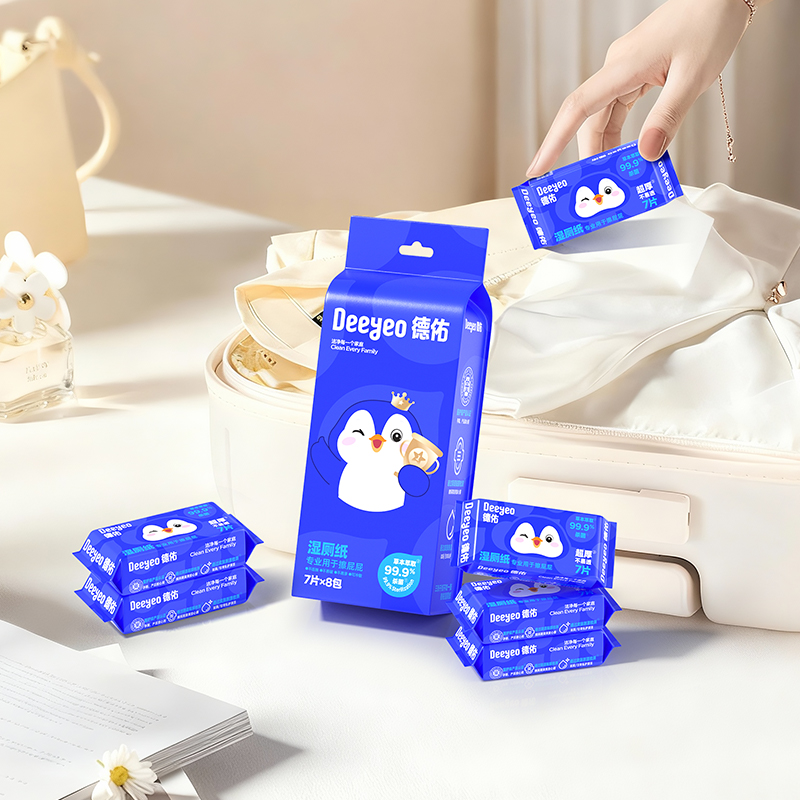
Packaging formats dictate how consumers interact with the product daily. Flow packs with rigid plastic closures dominate consumer retail. They offer excellent moisture retention and easy one-handed access. The rigid lid snaps shut securely, preventing air ingress. Resealable sticker flaps provide a lower-cost alternative. However, they risk drying out over time as the adhesive degrades from moisture exposure and repeated handling.
Tub formats work well for home bathrooms. They offer a permanent dispensing solution that consumers can refill. Travel-size individual sachets cater to on-the-go consumers needing discreet options. High-capacity roll formats suit commercial or institutional dispensers in high-traffic facilities. Each format requires specific manufacturing capabilities and specialized packaging machinery. You must align your packaging choice with your target demographic's primary usage environment.
Packaging Format | Ideal Use Case | Moisture Retention | Production Complexity |
|---|---|---|---|
Flow Pack with Rigid Lid | Premium Retail / Home Use | Excellent (12-24 months) | Medium |
Flow Pack with Sticker Flap | Budget Retail / Quick Turnover | Moderate (6-12 months) | Low |
Individual Sachets | Travel / Hospitality | Superior (24+ months) | High |
High-Capacity Rolls | Commercial / Institutional | Good (Requires sealed dispenser) | Medium |
Barrier film properties are critical for product viability. The packaging must prevent evaporation over a standard 12 to 24-month shelf life. Multi-layer PET/PE laminates typically provide the necessary moisture and oxygen barrier. If the film is too thin, the liquid formulation will slowly evaporate. This leaves the consumer with a useless dry product. The heat seals on the ends of the flow pack must be perfectly calibrated to prevent micro-leaks during transit.
Dispensing orifices require careful engineering. A poorly designed orifice leads to chaining. This phenomenon occurs when pulling one sheet pulls several others out simultaneously. Chaining causes extreme consumer frustration, unnecessary product waste, and cross-contamination. The die-cut opening must provide just enough friction to separate the perforated or folded sheets cleanly. We often see brands overlook the die-cut shape, resulting in massive consumer complaints about dispensing failures.
The thickness of the sheet, measured in grams per square meter (GSM), directly impacts raw material costs. Higher GSM means more cellulosic material per individual unit. This increases the overall production cost per pack. A 60 GSM sheet will feel significantly more luxurious than a 45 GSM sheet, but it will carry a correspondingly higher manufacturing cost. You must determine the exact GSM that satisfies your target market without destroying your profit margins.
GSM also affects roll yield and freight efficiency. Lower thickness guarantees a higher count of sheets per pack or commercial roll. This optimizes retail shelf space. It avoids excess bulk in warehousing. It significantly improves shipping weight efficiency, allowing you to fit more sellable units onto a single pallet. You must balance the consumer desire for a thick product against these harsh economic realities. Thicker materials also require slower line speeds during the folding process, which can increase the factory's conversion fee.
Minimum Order Quantities vary heavily based on the level of customization required. White-label, off-the-shelf formulations typically require lower MOQs. Manufacturers already have these liquids compounded and ready to run. Custom formulations demand higher MOQs to justify the chemical setup, compounding time, and line-cleaning procedures required between batches. The packaging film itself often dictates the MOQ, as printing presses require minimum run lengths to be cost-effective.
Standard lead times encompass several distinct phases. Tooling for custom packaging formats takes time to engineer. Packaging printing requires color proofing and cylinder setup. Initial production runs often take longer than subsequent reorders as the factory calibrates machinery to your specific substrate and liquid dosing requirements. You must build these timelines into your launch schedule to avoid out-of-stock situations.
Factor in hidden compliance and development costs when evaluating manufacturer quotes. Third-party flushability testing requires significant upfront investment. Custom fragrance development adds laboratory expenses. Regular compliance auditing ensures ongoing regulatory adherence but adds to the overall operational budget. Ignoring these factors leads to inaccurate margin projections and cash flow issues during the critical launch phase.
Relying on single-source raw material providers creates massive operational risk. Specialized dispersible nonwovens are subject to global supply chain disruptions. A shortage of short-fiber wood pulp or viscose can halt your entire production line. Without raw materials, even the most advanced manufacturing facility sits idle. You cannot afford to have your retail shelves empty because a single supplier failed to deliver.
Require manufacturers to demonstrate diversified supplier networks. They must source critical components from multiple geographic regions. They must maintain robust safety stock policies for your specific substrate. This mitigation strategy ensures continuous production even during global material shortages or shipping delays. Ask to see their inventory management protocols during your facility audit.
Inconsistent liquid dosing ruins product quality and destroys brand trust. Dry sheets fail to clean effectively and cause friction on the skin. Oversaturated sheets pool liquid at the bottom of the pack. This degrades the cellulosic substrate prematurely and causes the product to fall apart before use. Manual spot checks are insufficient for high-speed production lines running hundreds of packs per minute.
Manufacturers should utilize automated inline inspection systems to prevent these issues. Moisture sensors detect dosing variations in real-time, automatically adjusting the liquid flow. Vision systems scan the line to reject improperly folded, cut, or sealed packs before they reach the boxing station. These technologies ensure every batch meets exact specifications.
Verify the presence of automated moisture sensors on the production line.
Check for inline weight scales that reject over-filled or under-filled packages.
Ensure vision systems monitor the integrity of the plastic closure seals.
Review the manufacturer's standard operating procedures for manual batch sampling.
Consumers are highly sensitive to greenwashing. Using synthetic binders in supposedly eco-friendly products creates massive brand risk. If an independent audit or consumer watchdog reveals microplastics in your flushable product, the reputational damage is immediate and severe. Retailers will pull non-compliant products from their shelves. The financial fallout from a product recall based on false environmental claims can bankrupt a new brand.
Demand transparent material safety data sheets (MSDS) for every component. Require verifiable biodegradable certifications from recognized environmental bodies. Independent laboratory results must confirm the complete absence of plastic polymers in the substrate. Transparency is your best defense against greenwashing accusations. Make these certifications readily available to your retail partners and end consumers.
Initiate the Request for Proposal (RFP) process with at least three vetted manufacturers to compare production capabilities and compliance records.
Request raw substrate samples for independent tear and absorbency testing before discussing liquid formulations.
Schedule a comprehensive facility audit to verify GMP compliance and inspect automated quality control systems on the factory floor.
Commission third-party slosh box testing to validate flushability claims before finalizing any packaging artwork.
A: Standard versions utilize plastic fibers like polyester or polypropylene. These materials provide high strength but do not break down in water, causing severe plumbing blockages. Flushable versions use short-fiber plant cellulose. This specialized material binds together without synthetic resins. It disperses rapidly in agitated water, safely passing through municipal wastewater systems without causing clogs.
A: High-quality flushable products rely on specialized hydroentangled nonwovens. Manufacturers primarily use a blend of wood pulp and viscose. These natural, plant-based materials provide necessary softness and absorbency. It is critical to explicitly avoid any plastic binders or synthetic fibers in the manufacturing process to ensure strict environmental compliance and true flushability.
A: Reputable manufacturers follow strict INDA/EDANA testing guidelines to verify flushability. This comprehensive framework includes clearance tests to ensure the product flushes easily from the bowl. Disintegration testing, often using a slosh box, measures how quickly the material breaks down in agitated water. Municipal sewer pump tests confirm the dispersed fibers will not clog public wastewater infrastructure.
A: Minimum Order Quantities depend heavily on the level of customization required. For off-the-shelf white-label formulations, MOQs can start around 10,000 units. If you require custom liquid formulations, specific sheet sizes, or bespoke printed packaging, expect MOQs to range from 30,000 to 50,000 units. This volume justifies the setup costs for automated production lines.
A: Launching a new brand typically takes 3 to 6 months. The initial phase involves formulation selection and bespoke packaging design, taking roughly 4 to 8 weeks. Tooling, packaging printing, and raw material procurement add another 4 to 6 weeks. Final production, quality control testing, and shipping usually require an additional 4 weeks before retail distribution.
A: Yes, brands can fully customize the liquid solution. You can adjust pH levels to match specific skin types. Manufacturers offer various active soothing ingredients like aloe vera, chamomile, or calendula. Custom fragrances can also be developed to resonate with specific target audiences. All customizations must undergo stability testing to ensure they meet strict skin-safety regulations.