Views: 0 Author: Site Editor Publish Time: 2026-10-26 Origin: Site
Commercial wet wipes help businesses manage routine cleaning and hygiene tasks across hospitality, healthcare, and commercial cleaning environments. However, not all wipes serve the same purpose. Their materials, formulas, moisture levels, and intended uses affect performance and safety.
This guide explains the main types of commercial wet wipes, their common applications, and the factors businesses should evaluate before purchasing. It also covers bulk purchasing and sustainability considerations to help buyers select products that match their operational needs.
For an overview of available products, explore Deeyeo’s wet wipes and hygiene product categories.
Table of Contents
Hotels and restaurants need practical products for routine cleaning and guest-area maintenance. General-purpose wipes can help remove everyday dirt from suitable hard surfaces, such as counters, tables, and selected fixtures.
The appropriate product depends on the surface and task. When a surface requires disinfection, staff should use a product specifically labeled for that purpose and follow its directions, including the required contact time.
Useful selection factors include:
Compatibility with the surface being cleaned
Cleaning or disinfection requirements
Pack size and ease of dispensing
Staff training and disposal procedures
Healthcare environments have more demanding hygiene requirements. Wipes used on environmental surfaces, medical equipment, or skin must be suitable for the intended application.
A general-purpose wipe should not be treated as a medical disinfectant. Healthcare buyers should check the product label, efficacy data, material compatibility, and applicable local requirements. They should also follow facility infection-control procedures.
Consider these factors when evaluating wipes for healthcare settings:
Intended use and approved application area
Efficacy claims supported by product testing
Compatibility with equipment and surfaces
Ingredient information and user safety
Batch identification and supplier documentation
Cleaning contractors often need wipes for spot cleaning, routine maintenance, and selected high-touch surfaces. Different tasks may require different sheet strengths, textures, formulas, and pack formats.
For example, a wipe for light dust and everyday marks may not be suitable for heavy grease. Likewise, a cleaning wipe may not provide the disinfection performance required for a specific job.
Choose products according to the cleaning task, surface type, required performance, and instructions on the label.
These wipes are designed for routine dirt and residue removal from suitable surfaces. Buyers should check whether the formula is compatible with the materials being cleaned, especially coated, painted, or delicate surfaces.
Sanitizing and disinfectant wipes are not interchangeable with every general cleaning wipe. Their performance depends on the formulation, tested claims, intended use, and directions for use.
Businesses should verify which organisms the product is tested against, the required contact time, and whether the product is suitable for the target surface. Avoid assuming that every antibacterial wipe also works against viruses or spores.
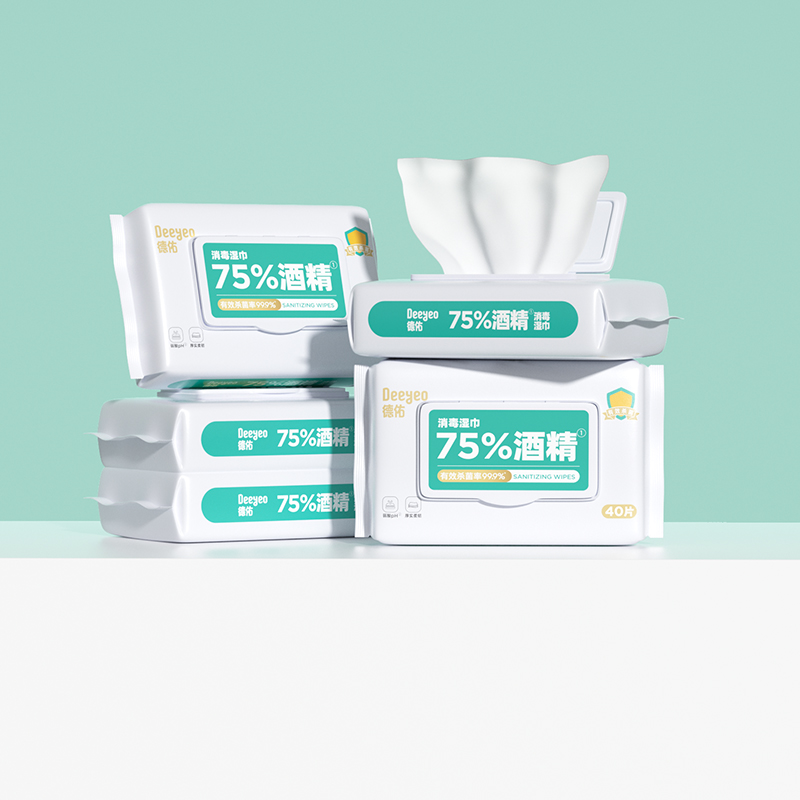
Deeyeo lists sanitizing wet wipes and other cleaning options in its product range. Buyers should review the specific product information before selecting a wipe for a particular task.
Kitchen cleaning wipes may be designed to help remove food splashes, grease, or everyday surface residue. The formula and wipe material should match the surface and cleaning task.
For food-contact surfaces, check the product instructions to determine whether rinsing is required before the surface is used again. Do not assume that a wipe is suitable for direct food contact simply because it is marketed for kitchen cleaning.
Explore Deeyeo’s household cleaning wipes range for related product options.
Personal hygiene wipes are intended for specific uses on skin. They should not automatically be substituted for environmental surface wipes, or vice versa.
When selecting personal-care wipes, consider the intended user, ingredient list, fragrance preferences, skin compatibility information, and packaging format. Deeyeo also offers baby wet wipes for personal-care applications.
Commercial wet wipes commonly use nonwoven fabrics. Their performance depends on the fiber composition, fabric structure, thickness, texture, and liquid formulation.
Key factors to compare include:
Strength: The wipe should remain intact during its intended use.
Absorbency: The material should hold enough liquid for the task.
Texture: Embossing or surface structure can affect wiping and pickup.
Sheet size and thickness: These influence coverage, handling, and consumption.
Formula compatibility: The liquid should suit the intended surface or skin application.
A thicker wipe is not always the best option. Buyers should balance cleaning performance, ease of use, waste, and cost per task.
Before ordering, define the application and evaluate the product against your operating requirements.
Selection factor | What to check |
|---|---|
Intended use | Cleaning, sanitizing, disinfection, or personal hygiene |
Surface or user | The target material, equipment, or skin application |
Ingredients and formula | Product label, relevant safety information, and usage instructions |
Material performance | Strength, absorbency, texture, and sheet dimensions |
Packaging | Resealability, dispensing, portability, and storage |
Documentation | Test reports, batch information, and applicable compliance documents |
Supply requirements | Order volume, lead time, consistency, and customization options |
For healthcare or other regulated environments, verify the requirements that apply in your market. Do not rely on general marketing terms as proof of regulatory compliance.
Buying wet wipes in bulk can help businesses manage stock and purchasing costs. However, ordering more than the business can use before the stated shelf life may create waste.
Before placing an order, estimate consumption, storage capacity, delivery lead times, and the product’s shelf life. Compare the cost per usable wipe or cleaning task rather than looking at unit price alone.
When evaluating a supplier, ask about:
Product specifications and ingredient information
Available test reports and quality documentation
Minimum order quantities and lead times
Packaging and private-label options
Batch consistency and complaint handling
Storage recommendations and shelf-life information
Learn more about Deeyeo and its manufacturing capabilities when assessing a potential supplier.
Wet wipes can create waste-management challenges, especially when they contain synthetic fibers or are disposed of incorrectly. Businesses should review product materials, packaging, and local waste-disposal requirements before making sustainability claims.
Terms such as “biodegradable,” “compostable,” and “flushable” do not mean the same thing. Their implications depend on the product, the conditions required, and the relevant test methods or standards.
To improve purchasing and disposal practices:
Check material and packaging claims with supporting documentation.
Follow local waste-management rules and product instructions.
Do not flush wipes unless the product is specifically labeled for flushing, and follow local wastewater guidance.
Estimate demand carefully to reduce expired or unused stock.
Ask suppliers about available material and packaging alternatives.
Commercial wet wipes support a range of cleaning and hygiene tasks, but the right product depends on the intended application. Businesses should compare formulation, material performance, surface compatibility, packaging, documentation, and total cost before purchasing.
For B2B buyers, a clear product specification and reliable supplier are essential to maintaining consistent supply and appropriate use. Review Deeyeo’s product categories and company information to explore available options.
They are used for tasks such as routine surface cleaning, selected sanitizing or disinfection applications, and personal hygiene. The intended use depends on the specific product.
Cleaning wipes remove dirt and residue. Disinfectant wipes are formulated and tested for specified antimicrobial claims and must be used according to their product directions.
Consider the task, surface compatibility, formula, material strength, sheet size, packaging, documentation, and total cost per use.
Options depend on the supplier. Buyers should confirm minimum order quantities, lead times, packaging choices, product specifications, and any private-label services directly with the manufacturer.
Not necessarily. Check the supporting claims, test conditions, product instructions, and local disposal requirements before selecting or flushing a product.