Views: 0 Author: Site Editor Publish Time: 2026-10-23 Origin: Site
Wet wipes quality control helps manufacturers maintain product safety, consistency, and performance. For B2B buyers, understanding quality testing is essential when evaluating wet wipes suppliers and approving products for wholesale orders. Key checks include fabric strength, absorbency, chemical safety, microbiological quality, moisture retention, and packaging integrity. This guide explains the main wet wipes quality control methods and what buyers should verify before placing an order.
Table of Contents
The quality of wet wipes starts with the fabric. Material selection affects softness, strength, absorbency, and suitability for different applications.
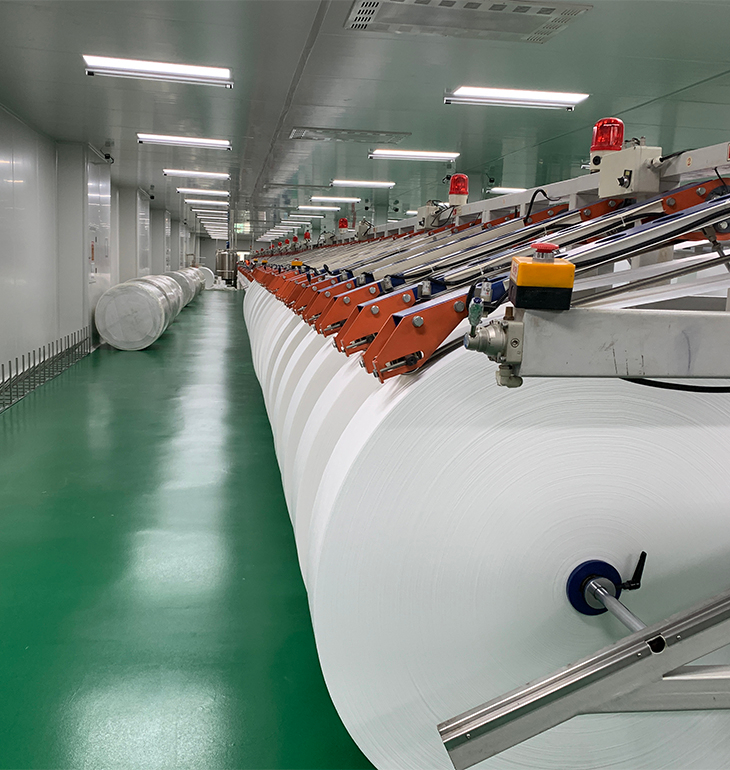
Wet wipes commonly use nonwoven fabrics made by bonding fibers through mechanical, thermal, or chemical processes. Common materials include spunlace, spunbond, airlaid, and meltblown fabrics.
Spunlace nonwoven: Uses high-pressure water jets to entangle fibers. It is commonly used in personal care wipes because it can provide softness and strength.
Spunbond nonwoven: Uses continuous filaments to form a fabric. Its properties depend on fiber composition and manufacturing conditions.
Airlaid nonwoven: Uses air to distribute fibers into a web. It can provide high absorbency for selected cleaning applications.
Meltblown nonwoven: Uses fine fibers to create a web with specific filtration or barrier properties. Its suitability depends on the intended wipe application.
The best material depends on the required performance, product formulation, target market, and cost. Buyers should request material specifications and samples before confirming an order.
Wet wipes must withstand handling and use without tearing too easily. Tensile strength testing measures the force required to break a fabric sample. Tear resistance testing evaluates how the material resists the propagation of a tear.
Testing should follow a method suitable for the fabric type and product specification. ASTM D5034 is a grab test method for textile breaking strength and elongation, while ASTM D1424 addresses tear resistance using a falling-pendulum apparatus. The appropriate method should be confirmed with the testing laboratory.
For buyers, these results help compare material performance and determine whether a wipe meets the requirements of its intended application.
Absorbency affects how much liquid a wipe can take up and retain. Testing methods may measure absorption capacity, absorption time, or liquid retention under defined conditions.
Other important fabric properties include:
Basis weight: The mass of fabric per unit area, usually expressed in grams per square meter (g/m²).
Thickness: The distance between fabric surfaces under specified measurement conditions.
Texture and softness: Properties that affect user comfort and the wiping experience.
Uniformity: Consistency in fabric weight, thickness, and structure across production batches.
Suppliers should provide relevant test results and explain the methods used. Comparing results is most useful when samples are tested under the same conditions.
Chemical safety testing helps confirm that wet wipes are suitable for their intended use. The required tests depend on the ingredients, product category, target users, and destination market.
Manufacturers should review raw materials and finished formulations for compliance with applicable requirements. Depending on the product, assessments may cover restricted substances, impurities, fragrances, preservatives, and other ingredients of concern.
Laboratory methods such as high-performance liquid chromatography (HPLC) and gas chromatography-mass spectrometry (GC-MS) may be used to analyze specific substances when appropriate.
Not every wet wipe requires the same test panel. Buyers should identify the product category and target market, then request relevant test reports and ingredient documentation from the supplier.
For wet wipes intended for skin contact, pH is one factor used to assess product formulation. Testing typically measures the pH of a prepared sample or wipe extract using a suitable method.
A pH value alone does not establish that a product is safe or suitable for every skin type. The formulation, ingredients, exposure conditions, and intended use must also be considered.
Buyers should request the manufacturer's pH specification and test results, especially for products intended for babies or sensitive skin.
Wet wipes contain moisture, so their formulations need appropriate microbial control. Preservative efficacy testing evaluates whether a preservative system can control specified microorganisms under defined test conditions.
Stability studies can also help assess changes in the formula, odor, appearance, packaging compatibility, and other product characteristics during storage.
The appropriate testing program depends on the formulation and product category. Buyers should request relevant preservative efficacy results, stability data, and shelf-life support where applicable.
Microbiological quality is a key part of wet wipes quality control because moisture and handling can create opportunities for contamination.
Testing may include total microbial counts and checks for specified microorganisms, depending on the product type and applicable requirements.
Common areas of assessment include:
Total aerobic microbial count.
Yeast and mold count, where applicable.
Specified microorganisms relevant to the product category.
Microbiological quality of raw materials and finished products.
Organisms assessed may include Staphylococcus aureus, Escherichia coli, Pseudomonas aeruginosa, and Candida albicans, depending on the applicable test method and product requirements.
Not every test applies to every wet wipe. The laboratory should use methods and acceptance criteria appropriate to the product category and destination market.
Contamination can enter through raw materials, water, equipment, personnel, production environments, or packaging operations. A structured hygiene program helps identify and control these risks.
Manufacturers should establish procedures for equipment cleaning, personnel hygiene, water quality, raw material handling, and environmental monitoring where appropriate.
Production records and corrective-action procedures help support traceability and quality investigations if a problem occurs.
Finished-product microbiological testing provides information about a sample at a particular point in time. It does not, by itself, establish that the product will remain suitable throughout its shelf life.
Preservative efficacy testing, stability studies, packaging evaluations, and appropriate microbiological monitoring can support product validation.
Buyers should request relevant reports and confirm that the proposed shelf life is supported by the manufacturer's data.
Physical performance tests help determine whether wet wipes meet the agreed product specifications and perform as expected during use.
Tensile and tear resistance testing evaluates the mechanical strength of the wipe. Results can help buyers compare different materials and identify products that may be unsuitable for their intended application.
The testing method, sample preparation, wet or dry condition, and acceptance criteria should be documented. Wet wipes may behave differently when dry and after absorbing liquid, so the test conditions matter.
Moisture affects the feel and function of wet wipes. Insufficient moisture may reduce usability, while excessive liquid can cause leakage or uneven distribution.
Quality checks may include:
Measuring the liquid content of finished wipes.
Checking liquid distribution within the pack.
Evaluating moisture retention during storage.
Inspecting packs for leakage or seal failure.
Manufacturers should define product-specific limits and use consistent measurement methods. Buyers can compare test reports and samples against the approved specifications.
Sensory evaluation can assess texture, softness, odor, and general appearance. These checks are especially relevant when product feel and fragrance are part of the customer specification.
For fragrance-free products, odor checks can help identify unexpected changes. Sensory evaluation should complement, rather than replace, chemical and microbiological testing.
Packaging protects wipes from contamination, moisture loss, and physical damage. Quality inspections should examine the package as well as the wipes themselves.
Depending on the packaging format, checks may include:
Seal integrity and leak resistance.
Closure performance after repeated opening.
Pack dimensions and wipe count.
Dispensing performance.
Label accuracy and print quality.
Carton condition and shipping protection.
Testing methods should match the packaging design. A package that passes visual inspection may still require additional testing to verify its seal performance.
Wet wipes requirements vary according to product claims, ingredients, intended use, and sales market. Buyers should confirm the applicable rules before approving a product or accepting a supplier's compliance claims.
Several ISO standards may be relevant to wet wipes manufacturing and testing, depending on the product category.
ISO 9001: Specifies requirements for a quality management system.
ISO 22716: Provides guidelines for good manufacturing practices for cosmetic products.
ISO 11930: Addresses the evaluation of antimicrobial protection of cosmetic products.
ISO 10993 series: Covers biological evaluation of medical devices and may be relevant when a wipe is regulated as a medical device.
These standards serve different purposes. Their relevance should be determined from the product's classification and the manufacturer's quality system.
In the United States, the regulatory pathway for wet wipes depends on their intended use and claims. Products marketed as cosmetics, drugs, or medical devices may be subject to different requirements.
In the European Union, cosmetic wipes may fall under the EU Cosmetics Regulation when they meet the definition of a cosmetic product. Products making biocidal or medical claims may be subject to different rules.
REACH may also be relevant to chemical substances and applicable restrictions. It should not be treated as a universal certification for finished wet wipes.
Before importing products, buyers should identify the correct product classification and verify the applicable ingredient, labeling, safety, and documentation requirements.
Certificates, registrations, and laboratory reports are not interchangeable. Each document serves a different purpose.
When assessing a supplier, buyers should check:
Whether the quality management certificate is valid and covers the relevant manufacturing site.
Whether the product has the required test reports for its intended use.
Whether ingredient and labeling documentation meet the destination market's requirements.
Whether any claimed certification applies to the specific product, material, or facility.
Whether the supplier can provide traceability and batch-related records.
FDA registration should not be interpreted as FDA approval of every product. CE marking is relevant only when the applicable EU legislation requires it. Buyers should verify claims against the actual regulatory pathway.
An effective quality control system covers raw materials, production, finished products, and packaging. Documented checks help manufacturers detect deviations and maintain consistent output.
Incoming materials may include nonwoven fabric, water, formulation ingredients, preservatives, and packaging components.
Inspection can include document review, identity checks, material specifications, and selected physical or chemical tests. Suppliers should establish acceptance criteria before materials enter production.
In-process monitoring helps identify problems before they affect an entire production batch. Depending on the manufacturing process, checks may cover:
Fabric dimensions and feed consistency.
Liquid dosage and distribution.
Product weight and wipe count.
Sealing and packaging performance.
Hygiene conditions and relevant microbial controls.
Records should identify deviations and document corrective actions.
Finished-product testing verifies whether the batch meets the approved specification. The inspection plan should be based on product risks and customer requirements.
Checks may include appearance, dimensions, wipe count, moisture content, pH, microbiological quality, packaging integrity, and other relevant product-specific tests.
Not every parameter needs to be tested in the same way for every product. The quality plan should define the required tests, sampling frequency, acceptance limits, and release criteria.
Reliable quality also depends on the consistency of incoming materials and the supplier's production controls.
B2B buyers can assess suppliers by reviewing quality procedures, relevant certificates, test reports, sample results, and traceability arrangements. Where appropriate, supplier audits can provide additional information about manufacturing practices.
Batch records and documented complaint-handling procedures support investigations and corrective action when quality issues arise.
Before placing a bulk order, buyers should confirm the product specifications and agree on the quality requirements with the supplier.
Use this checklist to guide the evaluation:
Confirm the fabric type, dimensions, basis weight, and intended application.
Request relevant physical performance and absorbency test results.
Review ingredient information and applicable chemical safety documentation.
Request microbiological test reports appropriate to the product category.
Confirm the product's pH and preservative efficacy data where applicable.
Review packaging integrity, moisture retention, and dispensing performance.
Verify relevant certificates and market-specific compliance documents.
Approve a sample and document the final product specification.
Agree on inspection criteria, batch traceability, and product release requirements.
A clear quality agreement helps both parties understand the acceptance criteria before mass production and shipment.
Wet wipes quality control involves more than checking the finished product. It includes material inspection, chemical safety assessment, microbiological testing, physical performance checks, packaging evaluation, and documented production controls.
For B2B buyers, reviewing relevant test reports, confirming product specifications, and verifying supplier documentation can reduce purchasing risks. The appropriate testing and compliance requirements depend on the product type and target market. A clear quality agreement helps ensure that supplied wet wipes meet the agreed requirements for safety, consistency, and performance.
Wet wipes quality control is the process of checking materials, formulations, microbiological quality, physical performance, and packaging to determine whether products meet defined specifications and applicable requirements.
Common tests include fabric strength, absorbency, pH, microbiological quality, preservative efficacy, moisture retention, and packaging integrity. The required tests depend on the product category and intended use.
Testing may include total microbial counts and checks for specified microorganisms using suitable laboratory methods. Manufacturers also use hygiene controls and documented production procedures to reduce contamination risks.
ISO 9001 addresses quality management systems, ISO 22716 covers cosmetic GMP guidelines, and ISO 11930 addresses antimicrobial protection of cosmetic products. Applicability depends on the product and the manufacturer's activities.
Buyers should request relevant product specifications, laboratory test reports, ingredient information, applicable certificates, packaging details, and traceability documentation. They should also approve product samples and agree on quality acceptance criteria before production.