Views: 0 Author: Site Editor Publish Time: 2026-07-10 Origin: Site
Navigating airport security brings a specific type of stress, especially when deciphering the TSA 3-1-1 liquids rule. Travelers constantly question the status of moisture-heavy items. You want to know if your hygiene products will survive the checkpoint. Airlines have significantly reduced complimentary hygiene hand-outs post-pandemic. Packing your own surface cleaners for high-touch areas like tray tables and seatbelts is now a mandatory travel habit. The core problem is maximizing your limited quart-sized liquid bag space. You cannot afford to risk confiscation or secondary screening delays. You need to know exactly what counts toward your liquid allowance. While the official TSA classification provides a definitive answer, the physical reality of how these items interact with airport security scanners requires a strategic approach. Understanding both the written rules and the screening technology ensures you move through the checkpoint without unnecessary bag pulls.
Official Classification: Wet wipes are not classified as liquids by the TSA and do not need to be placed in a quart-sized 3-1-1 bag.
Volume Limits: There are no TSA-mandated quantity limits for wet wipes in either carry-on or checked baggage.
Screening Anomalies: Large, dense packs of wet wipes can trigger false positives on X-ray machines, leading to bag searches and swab tests.
Packing Strategy: Opting for travel-sized or individually wrapped wipes mitigates security delays and optimizes carry-on weight.
The TSA 3-1-1 rule strictly governs the transportation of liquids, gels, and aerosols in carry-on luggage. Passengers are allowed containers holding 3.4 ounces (100 milliliters) or less. All containers must fit into one quart-sized, clear, resealable bag, and each passenger is limited to one bag. The TSA classifies an item as a liquid, gel, or aerosol based on its physical properties at room temperature. If a substance can flow freely, conform to the shape of its container, or spread when applied, it falls under the liquid restriction. Items like toothpaste, shampoo, peanut butter, and hand sanitizer clearly fit these categories and must be restricted.
However, the moisture embedded in a porous substrate does not meet the TSA threshold for a restricted liquid. The liquid solution is suspended within the fabric fibers through capillary action. Because the liquid does not pool or flow independently of the solid material, wet wipes are entirely exempt from these volume restrictions. You can pack them without worrying about the 3.4-ounce limit. The physical state of the product is considered a solid for security screening purposes.
You absolutely do not need to group wipes with liquid toiletries in your clear plastic bag. You can pack them anywhere in your carry-on luggage, personal item, or backpack. Keeping them separate frees up valuable real estate in your quart-sized bag for actual liquid products. Space in that single quart bag is highly limited. By removing items that do not strictly require compliance, you can prioritize essential liquids like expensive serums, contact lens solution, prescription topical medications, and liquid cosmetics.
Many travelers make the mistake of stuffing travel-sized wipe packets into their liquids bag. This forces them to leave behind other necessary liquids or risk overstuffing the bag, which can cause the zipper to break or prompt a TSA agent to reject the bag for being improperly sealed. Keep your wipes in a side pocket or the main compartment of your bag.
The unrestricted status applies to both carry-on and checked baggage. You can pack as many packages as you need in either bag without violating TSA regulations. Checked bags have no liquid volume restrictions anyway, so you can pack massive bulk containers in your checked suitcase without a second thought. For carry-on bags, the lack of restriction means you can bring enough supplies to handle long layovers, flight delays, and multi-day transits.
There is a practical caveat to remember at the checkpoint. The final decision always rests with the individual TSA officer operating the lane. If an officer determines an item poses a security concern, or if a package is so heavily saturated that liquid is visibly pooling at the bottom of the plastic wrapper, they have the authority to classify it as a liquid or confiscate it. Therefore, practical packing methods remain necessary to avoid unnecessary scrutiny.
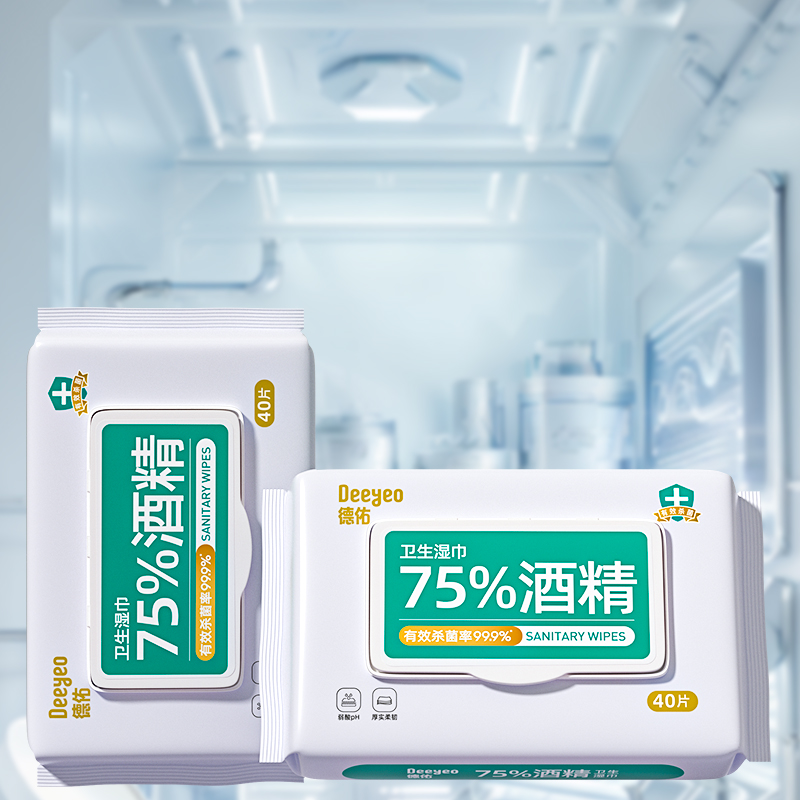
When selecting antibacterial and sanitizing wipes, the goal is effective surface disinfection without violating alcohol-volume restrictions. Popular products like Wet Ones are entirely exempt from the liquids rule. It is important to distinguish between liquid hand sanitizer, which is subject to 3-1-1 rules, and alcohol-based sanitizing wipes, which are completely unrestricted. You can carry large packs of sanitizing wipes without violating liquid limits. This makes them the superior choice for travelers who want to sanitize their hands and seating area without consuming their liquid allowance.
There is an implementation risk with heavy alcohol content. High-alcohol wipes in bulk packaging are the most likely to trigger explosive trace detection (ETD) swabs. The chemical signatures of certain alcohols, glycerin, and preservatives can occasionally confuse the screening equipment. When the machine detects these specific chemical compounds, it flags the item for a secondary inspection to rule out prohibited substances.
Using makeup remover and skincare wipes helps preserve 3-1-1 bag space for expensive liquid serums and foundations. Makeup is a major source of TSA confusion. Distinguishing between liquids, creams, pastes, and solids can be highly subjective depending on the agent. Switching to solid makeup remover wipes bypasses the fluid limits entirely. Packing dry wipes to be used with a travel-sized liquid cleanser is one option, but pre-moistened makeup wipes offer greater convenience without consuming your liquid allowance.
Be aware of a borderline warning regarding highly saturated exfoliating pads. Products like heavy acid peel pads or toner pads often come in hard plastic jars where liquid visibly pools at the bottom. If the liquid can flow independently of the pad when the jar is tilted, a strict agent will subject it to the 3.4-ounce limit. To avoid this, pour out any excess pooling liquid before you pack the jar, leaving only the saturated pads.
For family travel, managing high-volume necessities without triggering bag checks is essential. Assessing the weight-to-utility ratio of carrying full-sized baby wipe dispensers in a diaper bag is a standard part of packing. While they are bulky and heavy, they do not count against your liquid allowance. Parents can bring the massive 100-count packs without worrying about volume limits.
Even if baby wipes were somehow considered liquids by a rogue agent, they would fall under the TSA "medically necessary / infant nourishment and care" exemptions. TSA allows reasonable quantities of liquids for baby care. However, since the wipes are already exempt by default as solids, you do not need to declare them as medically necessary liquids at the checkpoint. You simply run them through the X-ray with the rest of your belongings.
Airport X-ray scanners use dual-energy absorptiometry and color-coding to differentiate between organic and inorganic materials. Organic materials, including plastics, paper, water, and food, typically appear orange on the monitor. Inorganic materials like metals appear blue or green. A dense, stacked brick of wet wipes appears as an opaque, dense organic mass on the screen. This visual presentation perfectly mimics threat items, specifically block explosives like C4 or plastic explosives.
TSA agents are trained to manually inspect any dense anomaly they cannot see through. If the X-ray cannot penetrate the block of wipes to show what is underneath or inside it, the agent must pull the bag. This is why bulk packs almost always trigger bag pulls, even though the item itself is perfectly legal to carry.
When your bag triggers an anomaly, the standard operating procedure involves a bag pull, physical inspection, and Explosive Trace Detection (ETD) swabbing. The agent will pull your bag aside, ask if there is anything sharp inside, and then open it. They will locate the dense mass—your pack of wipes—and remove it. The agent will then swab the outside of the package with a small cloth pad and run that pad through the ETD machine to check for explosive residue.
Certain preservatives, glycerin, or alcohol compounds in the wipes might occasionally cause ETD machine confusion, resulting in a false positive. If this happens, the agent will have to conduct a full pat-down of your person and a complete unpack of your carry-on bag. This entire process can add 15 to 30 minutes to your screening time, which is a massive delay for travelers on tight connections.
There are frequent community discussions where security agents actively advise travelers against bringing large, bulk sanitizing wipes in carry-on bags. The constant security alerts caused by dense wipe packs create severe operational friction at the checkpoint. Bringing massive packs of wipes causes unnecessary delays for both the passenger and the checkpoint queue. Every time a bag is pulled for a pack of wipes, the line slows down.
Agents prefer travelers pack smaller quantities to keep the lines moving efficiently. While you have the right to bring a 100-count brick of wipes, doing so guarantees your bag will be searched. Experienced travelers know that avoiding bag pulls is the key to a stress-free airport experience.
To speed up screening and avoid having your bag ripped apart by an agent, you must pack strategically. Follow these specific steps to ensure the X-ray operator can clearly identify your items.
Remove bulk wipe packages from your carry-on bag before sending it through the X-ray tunnel.
Place the wipes in a separate bin alongside your electronics and liquids bag. This allows the X-ray to view the wipes without other items obscuring the image.
Pack wipes at the very top of your personal item if you choose not to remove them. This makes them easily accessible if the agent needs to swab them.
Avoid hard-plastic dispenser tubs. The thick plastic adds unnecessary density and X-ray clutter, making the mass look even more suspicious.
Use soft, flexible packaging. Soft packs are easier for the scanners to penetrate and interpret correctly.
Choosing the right packaging format depends entirely on the length of your trip, your budget, and your tolerance for security delays. Each format presents specific trade-offs for air travel.
Packaging Type | Pros for Air Travel | Cons for Air Travel |
|---|---|---|
Bulk Packs (50+ count) | Lowest cost per unit. Sufficient volume for long-haul flights, family travel, and multi-day delays. | High weight. Maximum risk of X-ray flagging and bag pulls. Prone to drying out if the seal fails at altitude. |
Travel Packs (10-20 count) | Fits easily in seatback pockets and small purses. Minimal security risk. Low weight. | Higher cost per unit. May run out during extended travel disruptions or heavy use. |
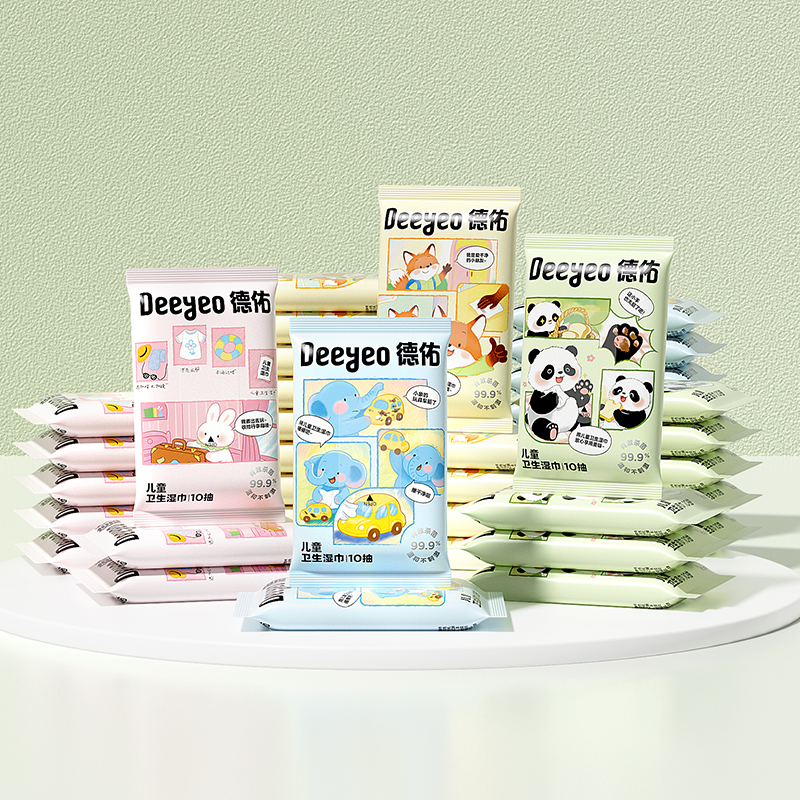
Individually Wrapped | Zero security risk. Zero moisture loss. Easy to distribute in jacket pockets and wallets. | Highest cost per unit. Generates the most packaging waste. Requires opening multiple packets for larger messes. |
Cabin pressure changes severely affect sealed packages during flight. Commercial airliners are pressurized to an equivalent altitude of 6,000 to 8,000 feet. As the plane ascends and cabin pressure drops, the air trapped inside your sealed wipe package expands. This expansion puts significant stress on the adhesive sticker seal used on most bulk and travel packs.
There is a high risk of the adhesive seal popping open during the flight. Once the seal is broken, the extremely dry cabin air (which typically hovers around 10% to 20% humidity) will rapidly suck the moisture out of the top layers of your wipes. By the time you reach your destination, half the pack may be completely dried out and useless. To prevent this, always choose packaging with hard-snap plastic lids over simple sticker-seals for air travel. Hard-snap lids maintain a secure, mechanical seal regardless of pressure fluctuations in the cabin.
For commercial brands and private labels aiming to design travel-ready, checkpoint-friendly hygiene products that bypass these screening pain points, selecting the right manufacturing partner is essential. Henan Yeesain Health Technology is a leading global OEM/ODM wet wipe manufacturer specializing in high-quality, custom-formulated wipe solutions and specialized single-use packaging. Their advanced engineering capabilities ensure that brands can produce custom, securely sealed travel-sized and individually wrapped wipes that comply fully with international transport safety standards while resisting altitude-induced pressure changes.
Audit your current carry-on bag and remove any liquid sanitizers or cleansers that can be directly replaced with a solid wipe alternative to free up 3-1-1 bag space.
Transfer all bulk wipe packages to the very top of your personal item or backpack to ensure rapid removal during the X-ray screening process.
Switch to hard-snap lid containers for any flights exceeding four hours to prevent cabin pressure expansion from breaking the adhesive seal and drying out your supplies.
Pack individually wrapped wipes in your jacket pockets or wallet to bypass bag screening entirely and keep them immediately accessible during the flight.FAQ
A: Yes, Clorox and Lysol wipes are allowed in both carry-on and checked bags. They do not count toward your liquid allowance and can be packed in any quantity.
A: Yes, Wet Ones are permitted in carry-on bags. Because they are considered solids, they do not need to be placed in your quart-sized liquids bag.
A: No, baby wipes are not considered liquids. They do not need to go in the quart-sized ziplock bag and can be packed directly in your diaper bag or carry-on.
A: There is no TSA-mandated limit on the quantity of wipes you can bring in either carry-on or checked luggage. You can bring as many as you can physically carry.
A: No, standard pre-moistened makeup remover wipes do not count as liquids. However, heavily saturated exfoliating pads with visible pooling liquid at the bottom of the jar might be scrutinized.
A: Large, dense packs of wipes appear as opaque organic masses on X-ray scanners. This visual density mimics threat items like block explosives, triggering a mandatory manual inspection by the agent.
A: Yes, you can pack an unrestricted amount of wipes in your checked luggage. Checked bags do not have liquid volume restrictions, making them ideal for bulk packs.