Views: 0 Author: Site Editor Publish Time: 2026-10-23 Origin: Site
Wet wipes packaging affects product freshness, convenience, transportation, and brand presentation. For manufacturers, distributors, and private label brands, choosing the right packaging format is an important part of product development. Individual packs, travel packs, and bulk packs serve different needs. This guide compares these options and explains how to select packaging materials, improve usability, and plan custom wet wipes packaging for your target market.
Table of Contents
Wet wipes packaging comes in several formats. The best option depends on the number of wipes per pack, intended use, distribution channel, and packaging requirements.
Individual wet wipes packs usually contain one wipe or a small number of wipes in a sealed sachet. Their compact design makes them suitable for sampling, travel, food service, promotional campaigns, and other single-use applications.
Key features:
Portability: Small sachets fit easily into pockets, bags, and travel kits.
Individual sealing: Each pack protects its contents until opened.
Controlled use: Users open only the number of wipes they need.
Brand customization: Printed sachets can display brand names, product information, and usage instructions.
Individual packs are useful when convenience and single-use distribution are priorities. However, the cost per wipe may be higher because each sachet requires separate packaging.
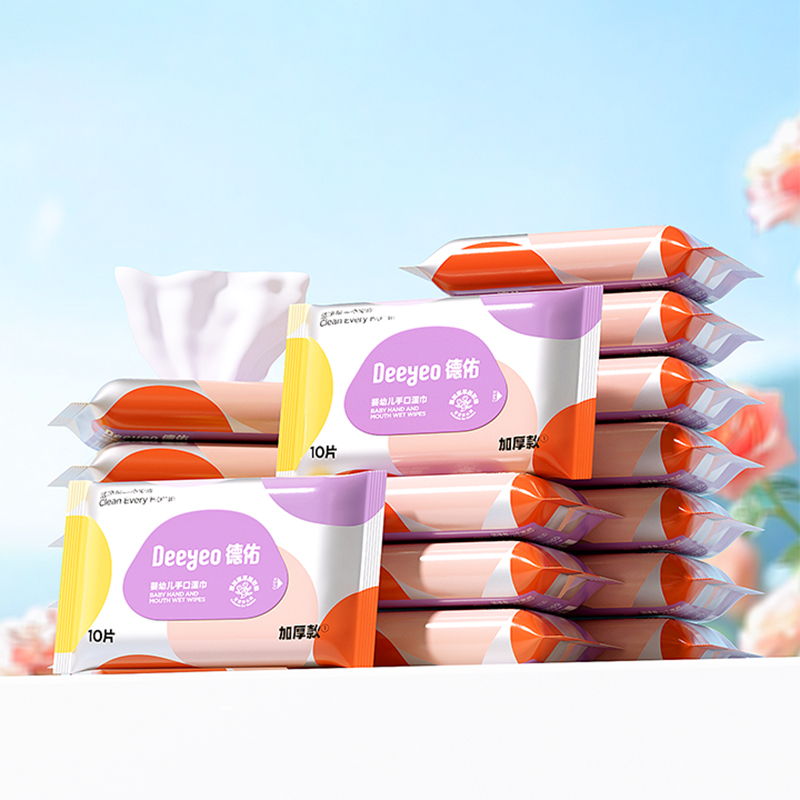
Travel packs contain multiple wipes in a compact pouch or container. They offer a balance between portability and quantity, making them suitable for commuting, holidays, family outings, and everyday personal care.
Key features:
Compact size: Easy to carry in handbags, backpacks, or luggage.
Resealable closure: Adhesive labels, resealable flaps, or other closures help retain moisture after opening.
Multiple wipes per pack: Users can access several wipes without carrying a large package.
Flexible packaging: Lightweight pouches can reduce storage and transportation space.
When selecting travel packaging, check the closure design, film strength, opening experience, and moisture retention. Packaging should remain secure during normal handling and transportation.
Deeyeo offers products in different pack formats, including portable wet wipes. Explore the Deeyeo product range for examples of available products.
Bulk wet wipes packaging is designed for products containing larger quantities of wipes. Common formats include large resealable pouches, tubs, and canisters, depending on the product and dispensing requirements.
Bulk packs are suitable for households, commercial buyers, hospitality businesses, and other users who need frequent access to wipes.
Key features:
Larger pack sizes: Reduce the need to purchase individual packs frequently.
Convenient dispensing: Resealable openings or lids help users access wipes.
Packaging efficiency: Larger packs may reduce packaging material per wipe, depending on the design.
Storage considerations: Pack dimensions, carton configuration, and closure quality affect warehousing and distribution.
Bulk packaging should protect wipes from moisture loss and contamination during normal storage and use. Buyers should compare pack capacity, material requirements, closure performance, and total delivered cost before choosing a format.
For household cleaning applications, visit Deeyeo Household Cleaning Wipes.
The three main packaging formats differ in quantity, portability, and use. The table below provides a general comparison. Actual pack counts and features depend on the product specification.
Feature | Individual Packs | Travel Packs | Bulk Packs |
|---|---|---|---|
Typical quantity | One or a few wipes | Multiple wipes | Larger quantities |
Portability | Very high | High | Lower |
Closure | Sealed sachet | Usually resealable | Usually resealable |
Main advantage | Convenient single-use distribution | Balance of portability and quantity | Convenient for frequent use |
Common formats | Sachets | Pouches or small containers | Large pouches, tubs, or canisters |
Common applications | Sampling, food service, travel kits | Personal care, family outings, commuting | Household and commercial use |
When comparing these options, consider the product's intended use, expected consumption, packaging cost, shelf presentation, and distribution method.
Packaging materials help protect wipes and maintain product quality. Material selection should consider moisture retention, durability, product compatibility, printing needs, and disposal requirements.
Flexible films are commonly used for individual sachets and multi-wipe pouches. They can provide moisture barriers while keeping packaging lightweight.
When evaluating flexible films, consider:
Moisture and vapor barrier performance
Seal strength and leak resistance
Resistance to tearing during handling
Compatibility with the wipe formula
Print quality and branding requirements
The appropriate film structure depends on the product, pack size, filling process, and expected storage conditions.
Some packaging structures combine multiple layers to provide specific barrier and sealing properties. Foil-containing structures may be considered when additional protection from light or moisture transmission is required.
However, multilayer materials can be more difficult to recycle than some single-material alternatives. Buyers should assess both the required protection and the available end-of-life options.
Tubs and canisters provide structural protection and can support repeated dispensing. They may be suitable for selected household, personal care, or commercial wipe products.
Important factors include lid fit, opening size, dispensing performance, container durability, and compatibility with refill formats where applicable.
Paper-based and other alternative packaging materials may help brands meet specific sustainability goals. Their suitability depends on moisture resistance, sealing requirements, material composition, and the recycling or composting infrastructure available in the target market.
Do not assume a material is recyclable, biodegradable, or compostable based only on its name. Confirm the relevant test results, certifications, and disposal conditions before making environmental claims.
A well-designed package should protect the product and make it easy for customers to use. For B2B buyers, packaging design also affects manufacturing, shipping, retail presentation, and brand consistency.
Wet wipes can dry out if packaging does not provide adequate protection or is not closed correctly. Individual packs need reliable seals, while multi-wipe packs require closures that remain functional after repeated opening.
Evaluate the seal strength, closure performance, and package integrity under expected storage and transport conditions.
Packaging should allow users to remove wipes without unnecessary effort. For travel and bulk packs, the opening should provide convenient access while helping limit moisture loss.
Sample testing can help identify issues such as difficult-to-open seals, multiple wipes dispensing together, or closures that do not reseal properly.
Packaging should provide enough space for required product information and brand elements. Depending on the product and destination market, information may include:
Product name and intended use
Ingredient information, where applicable
Directions for use and relevant warnings
Net quantity or wipe count
Batch identification and date information, where required
Manufacturer or responsible business details, where required
Check the applicable labeling rules before finalizing the artwork. Requirements vary by product category and market.
Package dimensions affect storage, carton configuration, pallet use, and shipping costs. A compact design may improve transport efficiency, but it must still protect the wipes and meet dispensing requirements.
Before mass production, confirm the finished pack dimensions, carton quantity, gross weight, and shipping configuration.
Custom wet wipes packaging allows businesses to adapt product presentation to their brand, customer group, and sales channel. Depending on the manufacturer's capabilities, customization may include packaging format, pack count, printed artwork, labels, and selected product specifications.
Start by identifying the intended application and sales channel. A travel product may require a compact resealable pouch, while a commercial product may prioritize larger quantities and convenient dispensing.
Specify the target market, intended use, expected pack count, and preferred packaging format before requesting a quotation.
Discuss the required barrier performance, film structure, sealing method, opening design, and compatibility with the wipe formula. These details help the supplier determine whether the proposed packaging is suitable for the product.
If sustainability is a priority, explain the specific goal and ask the supplier to provide supporting material information.
Provide the brand logo, packaging artwork, product details, and any required label content. Confirm the print area, color requirements, language versions, and artwork approval process before production.
Review packaging samples before approving a bulk order. Check dimensions, seal quality, opening performance, printing, and the interaction between the packaging and the wipes.
Confirm the final specifications in writing to reduce the risk of differences between the approved sample and the delivered product.
Deeyeo's parent company, Yeesain Health Technology Co., Ltd., provides wet wipes products and customization services. Learn more through the Deeyeo website or read the Custom Wet Wipes OEM and Private Label Guide.
Sustainability decisions should consider the full packaging design rather than one material claim. Packaging must still protect the wipes during storage, transport, and use.
Review pack dimensions, excess material, secondary packaging, and carton configuration. Reducing unnecessary material may improve packaging efficiency when product protection remains adequate.
Packaging made from mixed materials can be difficult to recycle in some waste systems. Ask suppliers whether the proposed structure is compatible with the recycling facilities available in the target market.
Clear disposal instructions can help customers understand how to handle packaging after use.
Terms such as recyclable, biodegradable, and compostable have different meanings and may depend on specific conditions. Request supporting documentation and check relevant local requirements before using these claims in marketing materials.
Packaging that fails to retain moisture can lead to dried-out wipes and product waste. Compare barrier performance, seal integrity, material use, and disposal options before selecting an alternative packaging structure.
Wet wipes packaging requirements depend on the product category and the country where the product will be sold. Buyers should confirm applicable requirements before finalizing materials, labels, and product claims.
Packaging materials should be suitable for the intended product and expected storage conditions. Ask the supplier for relevant material specifications and supporting test documentation when required.
Check the labeling rules for the target market and product category. Personal care, household cleaning, and disinfectant products may be subject to different requirements.
Do not assume that one label design meets the requirements of every country.
Agree on the inspection criteria before production. Depending on the product, checks may cover pack dimensions, printing, seal integrity, wipe count, carton condition, and batch traceability.
Documenting the approved specifications and inspection requirements helps buyers and suppliers work toward consistent deliveries.
The main formats include individual sachets, multi-wipe travel pouches, and bulk packs such as large pouches or tubs. The best choice depends on the intended use, quantity, and dispensing requirements.
Compact pouches with reliable resealable closures are common options. Buyers should evaluate portability, moisture retention, seal performance, and ease of opening.
Common options include flexible plastic films, multilayer structures, selected foil-based laminates, and rigid plastic containers. The appropriate material depends on barrier requirements, packaging design, product compatibility, and disposal considerations.
Customization may include pack format, wipe count, printed artwork, labels, and selected product specifications. Available options, minimum order quantities, and production requirements should be confirmed with the supplier.
Compare material use, product protection, recyclability in the target market, and verified environmental claims. A suitable option should support the product's storage requirements while meeting the brand's sustainability goals.
Choosing the right wet wipes packaging requires a balance of product protection, convenience, cost, and brand requirements. Individual packs support single-use distribution, travel packs balance portability and quantity, and bulk packs suit frequent use. Material selection, closure performance, labeling, and shipping efficiency also affect the final packaging solution.
For businesses developing new wet wipes products or private label ranges, define your requirements before requesting samples and quotations. Visit Deeyeo to explore its product range and discuss potential packaging and customization options.